
World-Class Infrastructure
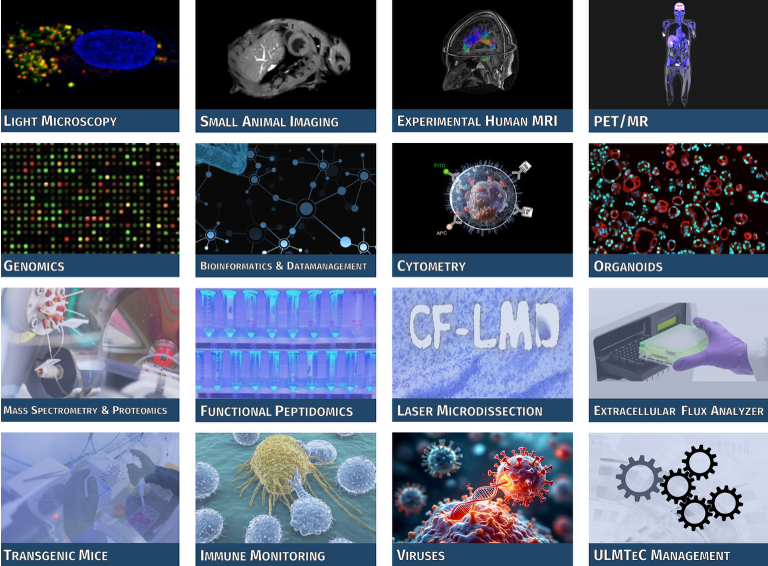
Full access to 15 ULMTeC core facilities offering cutting-edge technologies: Organoid Core Facility biobank (500+ annotated PDO lines), Single-Cell Sequencing Unit (scRNA-seq/ATAC-seq), 6-axis bioprinting, Genomics (NGS/OMICS), Cytometry (flow/FACS), Light/Electron Microscopy, High-Content Screening, Protein Analytics, and eLAB inventory systems for pseudonymized tracking.
Comprehensive Networking
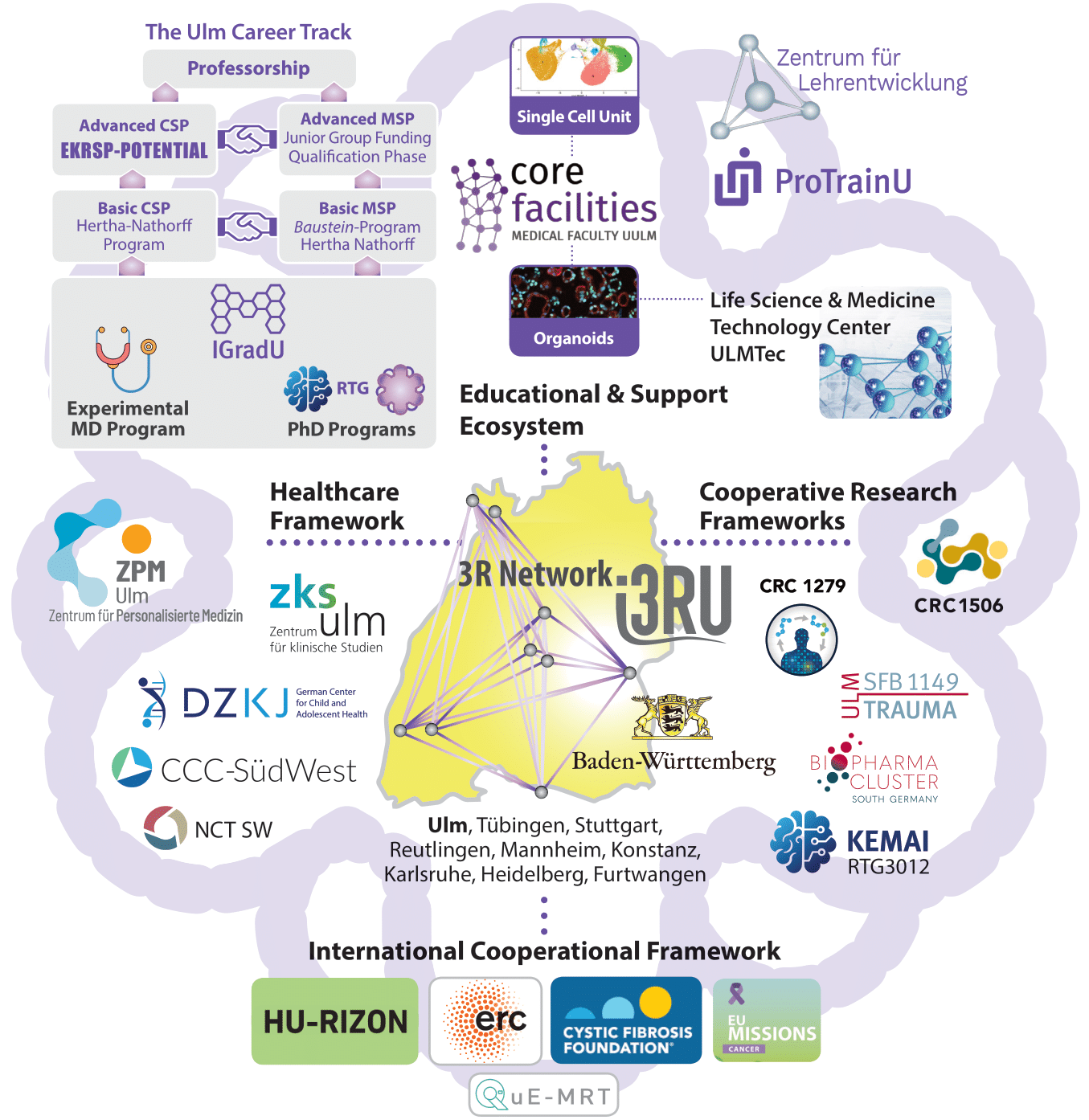
Org-BOOST is embedded in an ecosystem that connects organoid-based basic research with clinical translation, campus-wide structures, and global partners. The RTG is closely linked to Ulm’s Comprehensive Cancer Center and Centre for Personalized Medicine, where organoid pharmacotyping, molecular tumor boards, and clinical studies create direct bench-to-bedside feedback. Within Ulm University, Org-BOOST is integrated into IGradU, ProTrainU, and the Else-Kröner Research School POTENTIAL, enabling shared curricula and coordinated career support. Beyond campus, the program cooperates with CRCs (1149, 1279, 1506), the i3RU/3R network, European initiatives such as Cancer Mission, EIC, and NOEMA, and transatlantic consortia. Visiting researchers and Mercator Fellows contribute keynote lectures, focused project discussions, lab visits, and retreat participation, ensuring sustained, bidirectional scientific exchange with Org-BOOST trainees.
Core Facility

Arpad Varga
Core Facility Organoids
The ULMTeC Core Facility Organoids (CFO) provides services for the establishment, cultivation, and standardized handling of patient-derived organoid models, including functional drug-response profiling (pharmacotyping). Organoids are three-dimensional epithelial systems that preserve key architectural and functional features of their tissue of origin-in cancer, inflammatory, and healthy settings—and therefore represent a powerful translational science tool to bridge experimental research with clinically relevant questions.
Within Org-BOOST, the CFO acts as a central shared infrastructure spanning the full pipeline from tissue processing and SOP-based culture workflows to biobanking, scalable assay execution, and structured data/material handover. The facility combines traceable, standardized processes with automation-ready formats, including automated seeding, matrix-free (apical-out) culture systems, and high-throughput screening readouts—enabling robust and reproducible organoid-based testing across projects.
We currently host a living biobank of close to 300 organoid lines derived from more than ten tumor indications, including pancreatic, colorectal, and breast cancers, with additional entities such as urothelial carcinoma under active establishment. Our platform supports both academic and industrial partners and is designed to accelerate discoveries in cancer biology, inflammation research, and precision medicine.
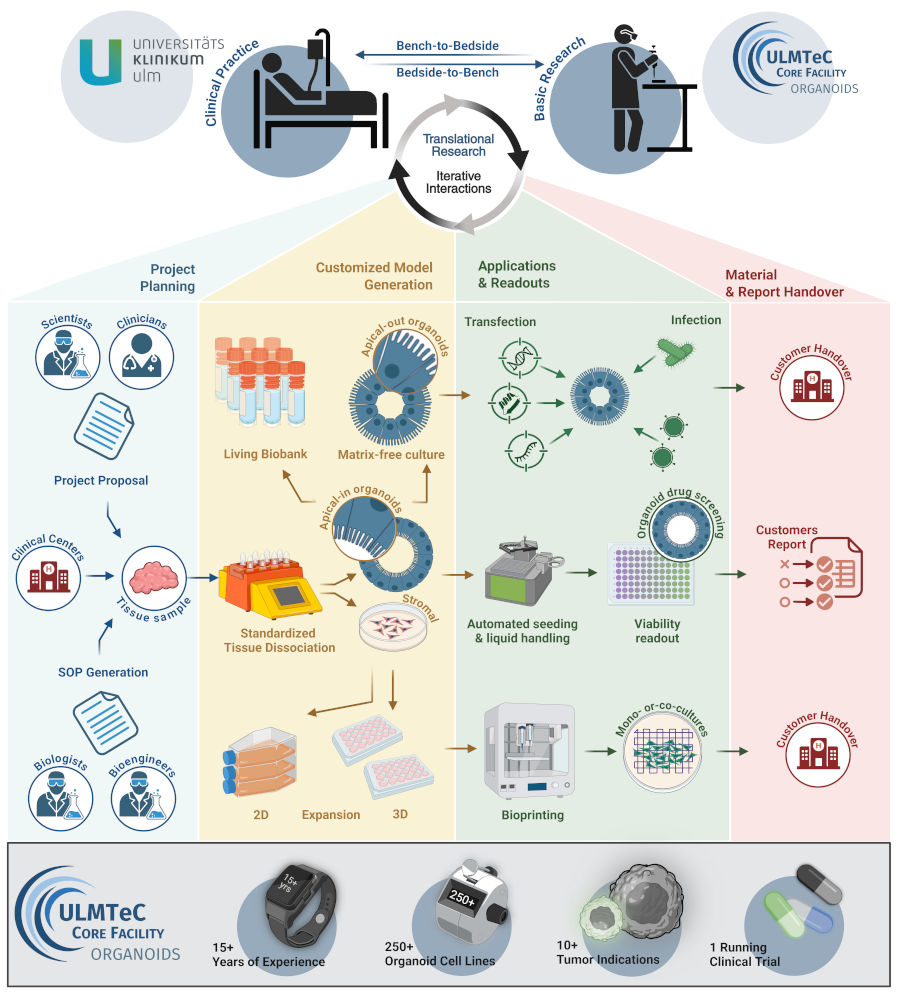
ULMTeC Core Facility Organoids (CFO): end-to-end translational organoid pipeline—from tissue dissociation and living biobanking (250+ lines; 10+ indications) to automated seeding, matrix-free (apical-out) culture, bioprinting, and high-throughput drug screening