Nadine Gaisa
Pathology

Michael Melzer
Urology
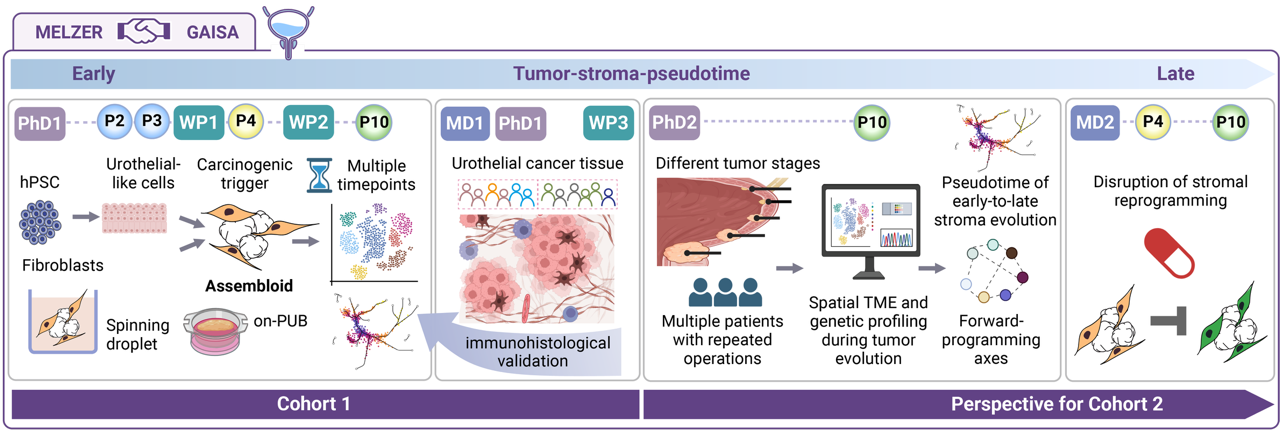
This project develops advanced hPSC-derived urothelial organoids carrying TP53 mutations (and later BRCA2/ATM), co-cultured with primary fibroblasts to form multicellular assembloids either in spinning droplet cultures or on decellularized porcine urinary bladder (PUB) scaffolds that provide physiological architecture. Chemical carcinogens like BBN or cyclophosphamide induce dysplasia and invasive cancer formation specifically in TP53-mutant backgrounds, enabling longitudinal tracking of tumor-stroma co-evolution. Doctoral researchers will apply single-cell RNA sequencing, multiplex immunohistochemistry, qPCR, and ligand-receptor interaction mapping to characterize cancer-associated fibroblast (CAF) polarization into myCAF (RGS5+), iCAF (PDGFRa+), and irCAF (SLC14A1+) subtypes, alongside urothelial cancer cell subtype evolution (luminal vs. basal). The work identifies forward programming axes, key receptor-ligand interactions driving early carcinogenesis, and validates molecular phenotypes and therapeutic targets through functional assays, contributing to precision strategies for high-risk bladder cancer prevention and early intervention.